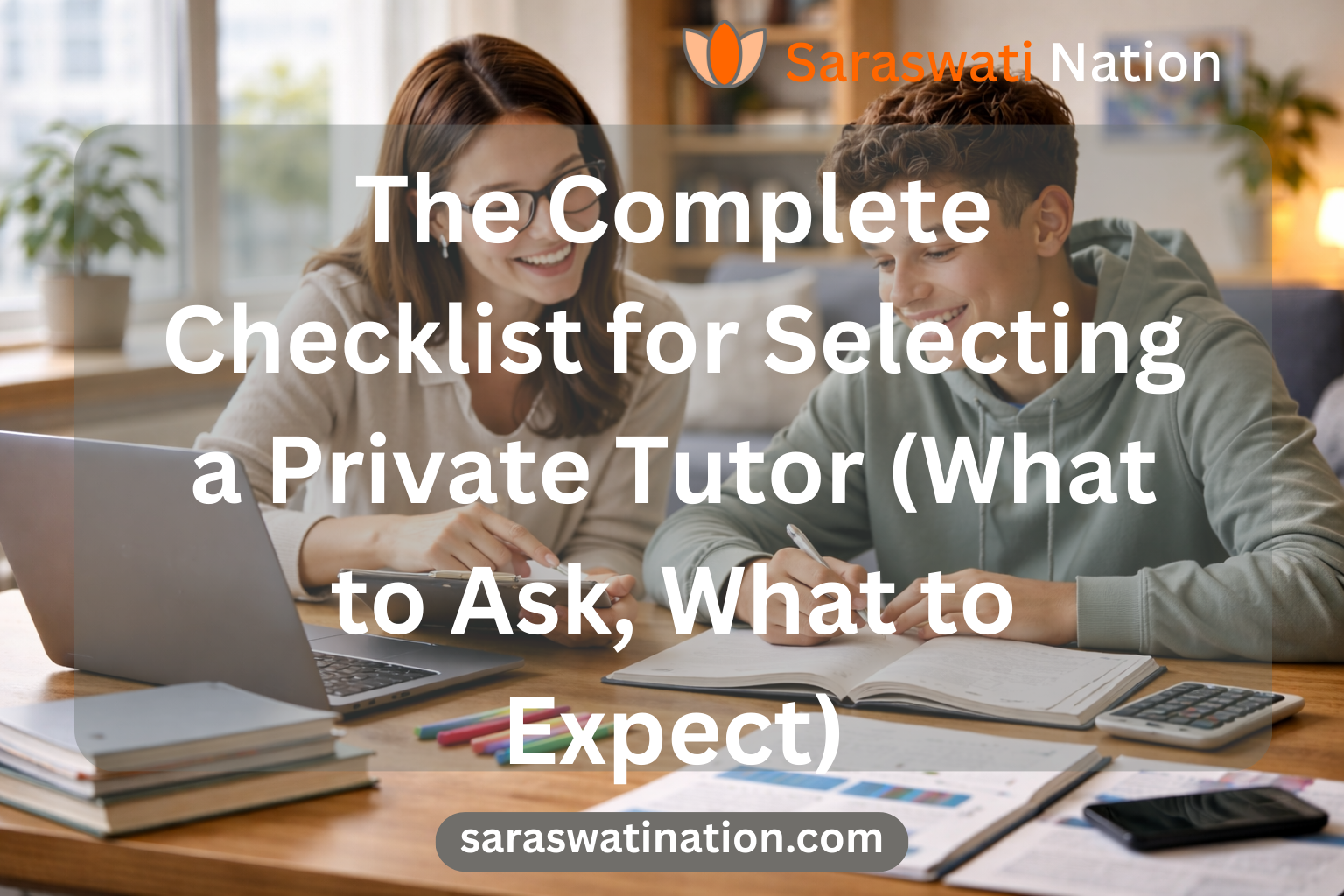
The Complete Checklist for Selecting a Private Tutor (What to Ask, What to Expect)
Choosing the right private tutor can change a student’s experience from “just getting by” to truly mastering the material. Parents of secondary‑school children and high‑school or university students need clear, evidence‑based guidance that saves time, protects the budget, and guarantees academic progress. The checklist below consolidates the most searched‑for questions, essential qualifications, and realistic expectations so you can make a confident hiring decision.
1. Define Your Goals
Before you even look at candidates, write down what you hope to achieve. Are you after deeper subject mastery, a specific grade improvement, better study habits, or preparation for standardized tests such as the SAT, ACT, AP, or university‑level exams? Having concrete goals lets you match a tutor’s expertise to the student’s exact needs and provides a measurable benchmark for success.
2. Verify Credentials and Experience
A qualified tutor should hold at least a bachelor’s degree in the subject they will teach; a master’s or Ph.D. is a plus for advanced topics. Look for a teaching or tutoring certification and at least two years of documented experience with the same grade level you’re targeting. Ask the tutor to share examples of past successes (for instance, “I helped a group of 10th‑grade students raise their math scores by an average of 15 %”). Because the tutor may be working in your home, a background check is essential for safety.
3. Ask the Right Interview Questions
During the interview, focus on how the tutor plans, assesses, and communicates. Sample questions include:
- “Can you walk me through a typical lesson plan?” – reveals organization and personalization.
- “How do you determine a student’s current level?” – shows a data‑driven diagnostic approach.
- “What strategies do you use to keep sessions engaging?” – highlights creativity and adaptability.
- “How will you track progress and keep parents informed?” – indicates transparency.
- “What is your policy on missed sessions or rescheduling?” – reflects professionalism.
A short trial lesson (often free or discounted) is a great way to see the tutor’s style in action before committing.
4. Evaluate Teaching Style and Compatibility
Make sure the tutor’s teaching method aligns with the student’s preferred learning style—visual, auditory, or kinesthetic. Personality matters too; a friendly, patient demeanor usually works best with teenagers. If cultural or linguistic considerations are important for your family, confirm that the tutor respects those values.
5. Confirm Logistics and Pricing
Agree on session length (60 minutes is standard, though longer blocks can work for project‑based work), frequency (once to three times a week depending on urgency), and location (in‑home, library, or online via a stable platform). Prices vary widely—typically $30–$80 USD per hour in the U.S. or €25–€70 in Europe—so request a written rate sheet and clarify any additional fees. Also settle on a cancellation policy, preferably 24‑hour notice, and capture all terms in a brief written agreement.
6. Look for Added Value
A tutor who supplies customized worksheets, integrates reputable digital tools (Khan Academy, Desmos, Quizlet), and provides regular progress reports adds considerable value. If you need test‑specific strategies for SAT, ACT, AP, IB, or university entrance exams, be sure the tutor has proven experience in those areas.
7. Safety and Professional Boundaries
Before the first session, verify the tutor’s photo ID and reference contacts. Establish a clear communication protocol with the parent (email, text, or a dedicated portal) and set firm boundaries for after‑hours contact and social‑media interaction. These safeguards protect both the student and the family’s peace of mind.
8. Review and Decide
Score each candidate on a simple 1‑5 scale for credentials, compatibility, price, and added value. Choose the highest‑scoring tutor whose strengths line up with the goals you defined in step 1. Once you’ve signed the contract, schedule the first official lesson and begin tracking progress.
9. Ongoing Evaluation
Check in with the student each month to gauge satisfaction, and conduct a quarterly review with the tutor to examine grades, confidence, and study habits. Adjust the tutoring frequency as needed—more intensive sessions during exam periods, fewer once mastery is achieved. Continuous monitoring ensures the relationship stays productive.
10. Strengthen Learning with Our Online Courses
Even with an excellent private tutor, supplementary online courses can reinforce concepts and provide extra practice. At Saraswatination we offer expertly designed courses in mathematics, science, language arts, and test preparation—all aligned with national curricula and university standards.
- Browse the full catalog in our shop:
- Visit our shop – https://saraswatination.com/shop/
- Need personalized advice? Contact our education consultants to discuss which courses complement your tutoring plan:
- Contact us here – https://saraswatination.com/contact/
Combining a qualified private tutor with high‑quality online courses creates a powerful, layered learning ecosystem that maximizes academic achievement.
Ready to empower your child’s education? Use this checklist, select the perfect tutor, and enhance the journey with our targeted online courses.

You may also like

Students Are Struggling. Could Technology Become Part of the Solution?